





















In the ever-evolving world of eCommerce, Magento has remained a go-to platform for retailers who seek robust, scalable solutions. However, the complexity of Magento’s traditional frontend can be daunting. Enter Hyvä, a theme that not only simplifies Magento’s frontend but revolutionizes it with a modern tech stack that developers love working with. This comprehensive guide explores why Hyvä is the future of Magento development.
Simplifying Magento with Hyvä Theme
Hyvä is not just a theme; it represents a comprehensive transformation of the Magento frontend. Traditionally burdened by a complex and resource-intensive setup that relies heavily on JavaScript libraries like KnockoutJS, Magento faces criticism for its cumbersome performance. Hyvä addresses these challenges head-on by streamlining the entire frontend architecture. This overhaul not only enhances performance but also simplifies management, making Magento an even more powerful tool for eCommerce success.
Key Features of Magento Hyvä Theme for eCommerce Store Owners
Hyvä offers several streamlined features that enhance the performance and manageability of Magento-based eCommerce stores:
- Reduced Dependencies: Hyvä minimizes the use of third-party JavaScript libraries, utilizing Alpine.js and Tailwind CSS instead. This reduction not only speeds up your site but makes it more responsive, enhancing user experience and potentially boosting SEO.
- Improved Performance: With its simplified tech stack, Hyvä ensures faster load times and smoother site interactions. Features like image optimization and lazy loading further boost performance, helping to retain customers and increase conversion rates.
- Ease of Management: Hyvä’s simplified approach reduces the complexity of site updates and management, allowing your team to make changes more efficiently without deep Magento expertise. This leads to lower maintenance costs and quicker updates.
- Customizability: Despite its simplicity, Hyvä offers extensive customization through Tailwind CSS, enabling you to easily align your site’s aesthetics with your brand identity without complex CSS overrides.
- Community and Support: Hyvä is backed by a vibrant community and robust support resources, including detailed documentation, forums, and third-party extensions. This support network helps you effectively manage and enhance your Magento store. Read more details about the community and support.
Why Developers Love Working with Magento Hyvä Theme and How This Benefits Your Business
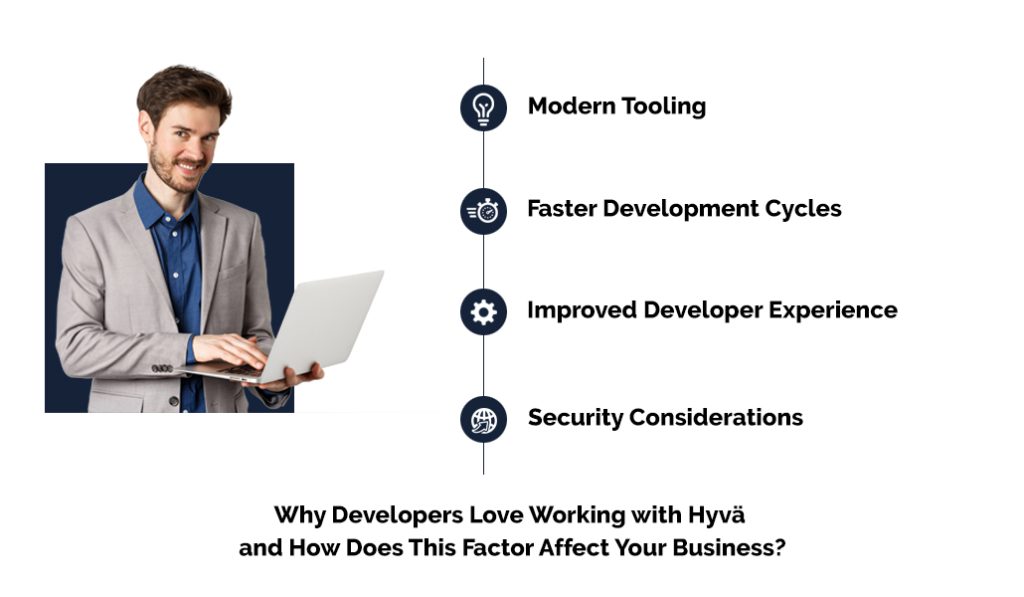
Adopting Hyvä significantly transforms the Magento development process, and this transformation has direct benefits for businesses as well. Here’s why developers are enthusiastic about this theme and how these benefits extend to the business side of operations:
- Modern Tooling
Hyvä leverages cutting-edge tools like Tailwind CSS and Alpine.js, aligning Magento development with current web development trends. These tools are not just robust and adaptable but are also enjoyable to work with, ensuring developers are working with the best tools available. For businesses, this means that the development team is equipped to implement modern, sleek, and responsive designs that can adapt to varying consumer demands and tech trends, ensuring the online store remains competitive and appealing to users.
- Faster Development Cycles
The streamlined approach of Hyvä, characterized by reduced reliance on heavy JavaScript libraries, allows developers to implement changes more rapidly. This efficiency leads to shorter project timelines, enabling businesses to launch new features, promotions, and products faster than competitors. Quick updates and the ability to respond agilely to market changes are crucial advantages in the fast-paced eCommerce sector, where staying ahead often defines success.
- Improved Developer Experience
Hyvä significantly enhances developer satisfaction through a cleaner, more maintainable codebase that adheres to best practices. A happy and efficient development team translates into fewer bugs, faster problem resolution, and a more reliable online store. For businesses, this means reduced downtime, better service quality, and higher customer satisfaction, all of which contribute to a stronger brand reputation and customer loyalty.
- Security Considerations
Hyvä addresses security concerns in Magento, such as vulnerability mitigation and compliance with industry standards. Its streamlined architecture and reduced dependencies minimize potential attack surfaces, while regular updates and community-driven security patches ensure ongoing protection for Magento-based eCommerce stores. Switch to Hyvä
Let Us Do the Switching Work
Get started with Hyvä by giving us the behind-the-scenes.
Case Studies: Success Stories with Magento Hyvä Theme
Several high-profile Magento stores have migrated to Hyvä, and the results speak for themselves. Read our case studies to understand how:
Getting Started with Magento Hyvä Theme for eCommerce Owners
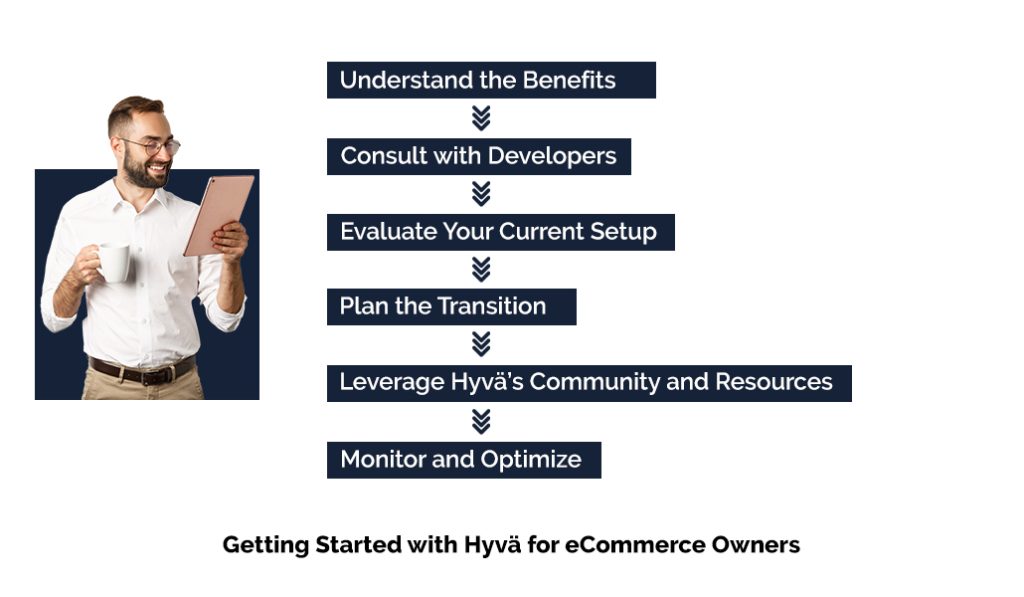
For eCommerce business owners contemplating a switch to Hyvä, here are practical steps to ensure a smooth transition and maximize the benefits of this modern Magento theme:
- Understand the Benefits: Before making any changes, familiarize yourself with the benefits of Hyvä, such as improved site performance, reduced development times, and modern, maintainable codebases. Understanding these advantages helps in making informed decisions about investing in this theme.
- Consult with Developers: Engage with your development team or consult with external Magento experts who have experience with Hyvä. They can provide insights into what the migration process involves and how it can be tailored to fit your business needs.
- Evaluate Your Current Setup: Review your existing Magento setup to determine how Hyvä could simplify and enhance your storefront. Consider aspects like current page load times, mobile responsiveness, and user experience to identify potential areas of improvement.
- Plan the Transition: Develop a clear plan for transitioning to Hyvä, including timelines, budget, and resource allocation. Ensure that there is a strategy in place for minimizing disruption during the changeover, particularly if your website handles a high volume of transactions.
- Leverage Hyvä’s Community and Resources: Take advantage of the resources available from the Hyvä community. The official Hyvä documentation, community forums, etc., that can provide support and guidance throughout the transition process.
- Monitor and Optimize: Once Hyvä is implemented, continuously monitor the website’s performance and seek feedback from users. Use this information to optimize the site further, ensuring that it not only meets but exceeds customer expectations.
Final Thoughts
Hyvä is transforming more than just Magento’s frontend; it’s setting a new benchmark for what businesses can expect from eCommerce platforms. With its modern tech stack, enhanced performance, and streamlined developer tools, Hyvä simplifies and enhances the way Magento is used to manage online stores. For eCommerce owners, this means not only a faster and more responsive website but also a more manageable and cost-effective operation.
Talk to us for a swift shift.
Frequently Asked Questions
Composable commerce is a modern approach to building eCommerce platforms using modular, best-of-breed components. Instead of relying on a single, monolithic system, you can “compose” your tech stack by selecting individual services—such as a CMS, PIM, or checkout engine—that are connected via APIs. This allows for greater flexibility, easier upgrades, and faster innovation across your eCommerce operations.
Composable technology refers to the practice of building digital systems using interchangeable and independent modules. In eCommerce, this often means selecting tools like headless CMS, ERP, CRM, and OMS, then connecting them through APIs to form a custom platform. The benefit of composable technology is that it enables you to scale and adapt quickly without being locked into a single vendor or system.
Composable architecture is the technical foundation of composable commerce. It follows an API-first, cloud-native, and microservices architecture model. This structure allows each system component (like search, pricing, or cart) to operate independently, making it easier to update, replace, or scale any part without affecting the others. Composable architecture is ideal for businesses that need agility and future-ready infrastructure.
Composable commerce is different because it shifts control back to the business. Traditional platforms are often monolithic, meaning all features are bundled together, which can slow down innovation and increase costs over time. In contrast, composable commerce allows businesses to choose only the tools they need, integrate them seamlessly, and adapt quickly as requirements evolve. This results in faster go-to-market, lower long-term costs, and a more tailored customer experience.
Headless commerce is an eCommerce architecture where the front-end (the “head”) is decoupled from the back-end systems. This means your storefront or user interface can be built using any framework or technology, while still communicating with back-end tools like your CMS, product database, or cart system via APIs. Headless commerce supports greater design flexibility, faster content delivery, and the ability to create consistent experiences across web, mobile, and other digital touchpoints.
Headless commerce works by allowing the front end and back end of your site to operate independently but stay connected through APIs. In a composable architecture, this headless structure is one of the key components—it enables businesses to swap or update the UI, checkout experience, or content engine without touching the core commerce engine. This leads to faster updates, better performance, and more freedom to create customized digital experiences for each channel or user group.