


















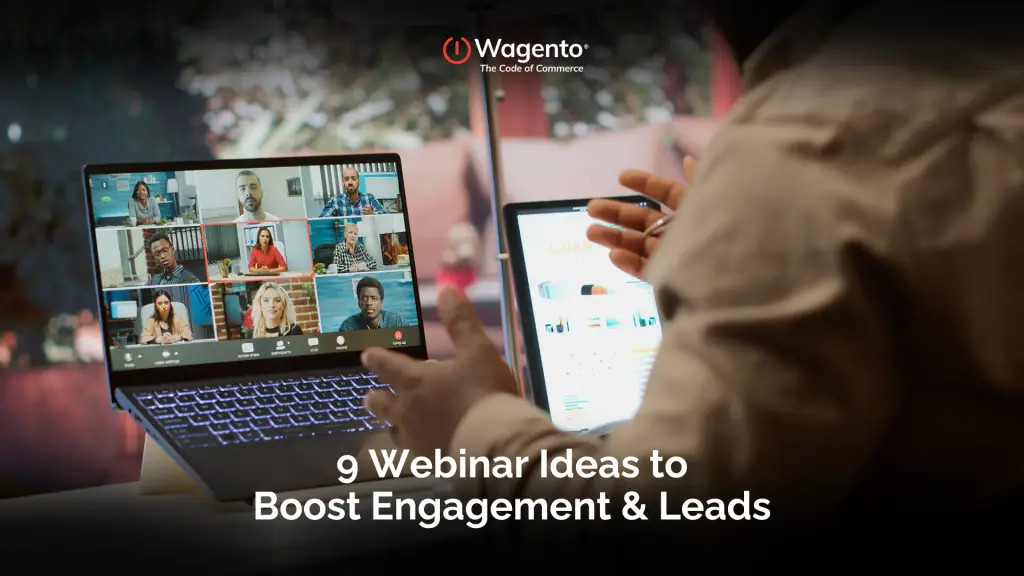
Webinars in 2026 are no longer optional – they’re essential for B2B demand generation, lead nurturing, and customer education. But attention spans are shrinking, and competition for digital time is intense. The difference between a forgettable session and one that drives leads lies in the planning, execution, and follow-up.
This guide gives you nine practical ideas to run webinars that attract signups, keep audiences engaged, and convert them into action.
The state of webinars in 2026
Webinars have matured into expected touchpoints in modern marketing. Audiences want interaction, not lectures. Passive slide decks no longer cut it. Instead, formats that blend conversation, visuals, and real-time participation are thriving.
What doesn’t work? Weak promotion, vague topics, or webinars that end with a simple “thank you” and no clear next step. To stand out, you need a structured strategy that covers both content and conversion.
Idea #1 – Mix formats to keep attention

Webinars that combine multiple modes of delivery hold interest longer than one-way slide presentations. Consider these hybrids:
- Panel → Demo → Q&A: Frame the problem, show a solution, then take questions.
- Workshops: Build something live, letting attendees follow along.
- Lightning rounds: Three short sessions with different speakers or topics.
- Case studies: Walk through a single business transformation with data.
Mixing formats appeals to different learning styles and gives you more opportunities to reset audience attention.
Idea #2 – Design for engagement from the start
Audiences lose focus quickly unless they’re actively involved. The key is to layer interactions throughout the session.
Early hooks: Start with a poll or a provocative question within the first five minutes.
Mid-session resets: Every 6–8 minutes, introduce a poll, chat prompt, or mini-quiz.
Spotlight attendees: Share a participant’s comment or question to make the session feel alive.
Close with urgency: Time-bound offers or limited bonuses encourage immediate action.
Balance is important—overusing polls or gimmicks can feel forced. Make sure every interaction adds value to the content.
Idea #3 – Promote across multiple channels

The best content fails without an audience. Successful webinars are promoted systematically across 4–6 weeks.
Promotion ladder example:
- 6 weeks out: Teaser posts and early registration.
- 4 weeks out: Introduce speakers and share clips.
- 2 weeks out: Social proof, testimonials, and agenda highlights.
- 1 week out: Emphasize urgency.
- 48 hours before: Calendar reminders and logistics.
- Day of: Final “don’t miss” push.
Use a mix of email, LinkedIn, targeted ads, and co-promotion with partners. After the live event, repurpose recordings into gated replays, social clips, and blog content to maximize reach.
Idea #4 – Choose topics that resonate
No format or promotion can save a weak topic. Strong topics come from addressing specific audience pains and using their own language.
Ways to find topics:
- Ask through surveys or quick polls.
- Listen in online communities.
- Analyze FAQs or support tickets.
- Repackage your most popular blogs or case studies.
Examples for eCommerce businesses in 2026:
- “Product Feed Fixes That Boost ROAS”
- “Cross-Border Checkout Simplified”
- “Interactive Shopping: Turning Live Video Into Sales”
- “Reducing Returns with Smarter Data and Messaging”
Topics should be framed as practical solutions, not product pitches.
Idea #5 – Use strong CTAs and smart follow-up
The true value of a webinar lies in what happens after it ends. Attendees must be guided to the next step.
During the session:
- Offer different CTAs based on poll responses or behaviors.
- Share links through slides, chat, and QR codes.
- Use urgency: bonuses that expire shortly after the event.
After the session:
- Segment into highly engaged, moderately engaged, and no-shows.
- High engagement: push to demos or sales calls.
- Moderate engagement: nurture with content.
- No-shows: send replay with incentives.
Surveys and engagement scoring help refine your future webinars while qualifying leads.
Idea #6 – Stick to a 6–8 week plan
Rushed webinars look sloppy. A structured back plan keeps everyone aligned.
Sample timeline:
- Week 8: Define goals, topic, KPIs.
- Week 7: Confirm speakers, draft outline.
- Week 6: Build landing page and emails.
- Week 5: Create promotional assets.
- Week 4: Launch promotions, rehearse.
- Week 3–2: Push harder on promotion, finalize content.
- Week 1: Technical checks, run-through, reminders.
- Day of: Execute with backup plans.
- Post-event: Send recording, follow-up, repurpose content.
Day-of essentials: wired internet, sound/video tests, loaded polls, a moderator to manage chat, and recording from the start.
Idea #7 – Pick technology that matches your goals
Your tech platform should support interaction and scalability, not just broadcasting slides.
Must-have features:
- Polls, surveys, and quizzes.
- Conditional CTAs that adapt to attendee behavior.
- Breakouts for smaller discussions.
- Seamless chat and Q&A.
- CRM integration for lead tracking.
- Recording and on-demand access.
- Multiple layout options and branding.
- Analytics dashboards for real-time insights.
- Strong reliability with backups.
Extra touches like branded overlays, multi-camera angles, and live social walls can make your webinar feel more professional.
Idea #8 – Repurpose your webinar into a content engine
A single webinar can fuel months of marketing content if repurposed thoughtfully. Instead of treating it as a one-off, build a content plan around it.

Ways to repurpose:
- On-demand replay: Gate the recording to capture new leads.
- Short video clips: Share 30–60 second highlights on LinkedIn, X, and Instagram.
- Slide deck upload: Post slides to SlideShare or your website as a resource.
- Blog recap: Publish a summary article with key takeaways.
- Infographics: Turn stats or frameworks into shareable graphics.
- Email nurture assets: Slice out tips or case study clips for drip campaigns.
Repurposing multiplies the ROI of your effort, reaches new audiences, and ensures the content doesn’t vanish once the live session ends.
Idea #9 – Leverage data and feedback for continuous improvement
Every webinar generates valuable data: who registered, who attended, how long they stayed, what they clicked, and what they said. Use this intelligence to refine future sessions.
Steps to leverage data:
- Attendance patterns: Identify where drop-offs occur and adjust pacing.
- Engagement metrics: See which polls or Q&A topics drew the most interest.
- CTA performance: Compare click-throughs on different offers.
- Survey feedback: Collect direct input on content relevance and delivery.
- Cross-webinar trends: Track improvements in registration-to-attendance rates over time.
By analyzing both quantitative data (attendance, clicks, conversions) and qualitative feedback (surveys, chat sentiment), you can evolve your webinars into sharper, higher-performing events every quarter.
Example workflow using all 9 ideas
Imagine you run a SaaS tool for eCommerce. You want to attract mid-market managers.
- Topic: “Fixing Product Feed Errors That Kill ROAS.”
- Format: Small panel → live demo → Q&A.
- Engagement: Poll in first 5 minutes, spotlight comments, timed bonus.
- Promotion: Six-week campaign with teasers, speaker highlights, urgency pushes.
- Plan: Week-by-week milestones, technical rehearsals, and content prep.
- CTAs: Offer 15 free audits for live attendees, segmented follow-ups.
- Technology: Platform with polls, CRM sync, on-demand replay, branded layouts.
- Repurpose: Record and clip content into blogs, videos, and graphics.
- Analyze: Review drop-off points, CTA clicks, and feedback for improvements.
Conclusion: the 2026 webinar recipe
Running webinars that convert in 2026 is about being intentional. Slides alone won’t cut it. The recipe is clear:
- Choose audience-driven topics.
- Mix engaging formats.
- Layer meaningful interactions.
- Promote systematically across channels.
- Close with clear CTAs and segment follow-up.
- Plan with discipline weeks in advance.
- Use technology that enables interactivity.
- Repurpose every webinar into multiple content assets.
- Leverage data and feedback to improve every cycle.
When you put these pieces together, your webinars won’t just attract attendees – they’ll generate leads, strengthen relationships, and deliver measurable ROI.