




















“We’re doing everything we can.”
That’s what teams say just before the wheels come off, marking the perfect moment for an eCommerce Project Rescue.
It’s not incompetence. It’s not neglect.
It’s just that somewhere between Black Friday rollouts, API delays, vendor handoffs, and checkout customizations—things spiraled.
And now? That sleek eCommerce project that was supposed to boost conversions and delight customers is… stuck.
Not launched.
Not stable.
Not anywhere close to where you promised it would be.
You’re firefighting through 15 Slack threads. You’ve blown past three deadlines. Your dev agency says “it’s almost there.”
And your CEO wants to know why the cart abandonment rate is still climbing.
That’s when the dreaded words start floating around the Zoom room:
“Do we need a rescue team?”
According to TeamStage Statistics, a staggering 70% of projects fail to deliver what was promised to customers.
Now What? Understanding the Real Cost of eCommerce Project Rescue
Every project begins with optimism. There’s a plan, a timeline, a budget, and a clear set of deliverables. But somewhere along the way, things unravel. Deadlines are missed, budgets balloon, and team morale dips. What follows is a frantic attempt to get things “back on track”—enter the project rescue mission. Understanding why eCommerce projects fail is the first step in preventing future breakdowns.
So, what is Project Rescue?
Project rescue is the process of salvaging a project that’s in trouble. On paper, it sounds like a smart move—hire consultants, adjust the scope, push harder. But what many organizations fail to see is that the true cost of rescuing a project goes far beyond writing a bigger check.
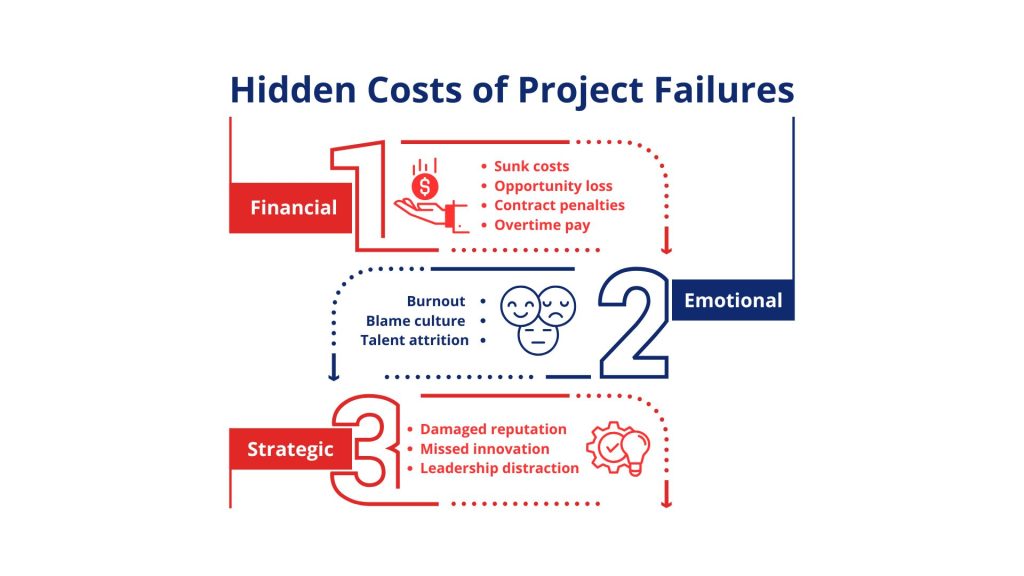
In this blog, we’ll uncover the hidden costs of project rescue—financial, emotional, and strategic. By understanding these costs, leaders can be better prepared to make proactive decisions and maybe, avoid the rescue mission altogether.
1. What Triggers a Project Rescue?
Most rescue operations aren’t planned—they’re reactive. An unfinished project that once looked promising may start showing early signs of distress: missed milestones, unclear roles, shifting requirements, or growing friction between stakeholders. These red flags are often ignored until they become flashing warning signs.
Common triggers for project rescue include:
- Poor project planning and unrealistic expectations
- Weak or inconsistent leadership
- Inadequate stakeholder involvement
- Lack of clear KPIs or delivery checkpoints
- Poor vendor coordination or offshore team mismanagement
By the time a rescue effort is launched, teams are already behind, overworked, and under pressure. The goal becomes survival, not success—and that shift carries a heavier price than most anticipate.
2. The Financial Toll: Beyond the Budget
When people think about project rescue, the cost of rescuing a project goes far beyond writing a bigger check. Rescuing a failing project often involves bringing in new teams, tools, or consultants. It may also mean revisiting contracts, upgrading infrastructure, or retraining staff.
But here’s the kicker: these are just the surface-level costs.
The hidden financial costs include:
- Sunk costs: Money already spent on work that may need to be redone or abandoned.
- Opportunity loss: The delayed time-to-market may cause lost sales, missed partnerships, or obsolescence.
- Contract penalties: Many B2B or enterprise projects come with SLAs or compliance expectations. A failure to meet these can lead to fines or broken partnerships.
- Overtime and burnout pay: Extended work hours to “save the project” come at a cost—either financially or through workforce fatigue.
📌 Case in point: A construction-tech company spent $600K developing a new procurement portal with a third-party vendor. When it failed to deliver after 8 months, they engaged a rescue team and ended up paying double the initial amount. Worse? Competitors launched similar portals while they were still fixing bugs.
3. Emotional & Cultural Costs
You can’t put a number on morale—but its impact on productivity is undeniable.
When projects derail, the emotional toll on teams is enormous. Frustration sets in as people work longer hours with little payoff. The blame game begins. Leadership loses credibility. Team members question their roles and the direction of the company.
Hidden emotional costs include:
- Burnout and disengagement: When the same people are asked to “rescue” a failing project they helped build, it can lead to guilt, shame, or apathy.
- Blame culture: Instead of focusing on solutions, teams start pointing fingers—leading to toxic work environments.
- Talent attrition: High performers may quit due to instability or stress, taking valuable institutional knowledge with them.
Even if a project is eventually salvaged, the emotional damage can leave lasting scars on the culture—and future projects will bear the weight.
Need Help Assessing Whether You Need a Project Rescue?
Whether you’re unsure how to move forward or deep in rescue mode, Wagento’s eCommerce project rescue experts will guide you. We’re here to take an honest look, without judgment, and help you find the path forward.
4. Brand Reputation and Client Confidence
A failing project isn’t just an internal issue—it’s a message to the outside world. Clients, partners, and even prospective hires notice when things don’t go as planned.
Rescuing a project often involves renegotiated timelines, revised deliverables, and awkward conversations with stakeholders. Each of these dents your brand equity.
Consequences include:
- Loss of client trust: If the project involved an external client, your reputation as a reliable partner takes a hit.
- PR fallout: In some cases, especially in tech or government projects, project failures make headlines.
- Internal doubt: Even within your organization, future initiatives may be met with skepticism or hesitation.
Building back trust is always harder than maintaining it. That’s why project rescue should be treated not just as a fix, but as a reputational risk strategy.
5. Technical Debt & Long-Term Maintenance Issues
When the goal becomes “just get it working,” the quality of technical decisions often takes a hit. Rescued projects tend to cut corners just to meet delivery targets. Unfortunately, this results in a mountain of technical debt.
Issues you may face:
- Fragile architecture: Short-term fixes rarely scale well. You might end up with systems that are difficult to maintain or integrate.
- Legacy code and inconsistent documentation: When a rescue involves multiple teams, documentation often falls by the wayside, creating confusion later.
- Increased maintenance costs: More bugs, more patches, and more time spent on reactive support instead of innovation.
In many cases, the long-term cost of maintaining a poorly rescued project far exceeds the cost of starting fresh.
6. Opportunity Cost: What You Miss While Saving One
Project rescue consumes time, talent, and focus. While everyone is busy putting out fires, other valuable opportunities are being missed.
Opportunity costs may include:
- Delayed new initiatives: Other revenue-generating or strategic projects are paused.
- Leadership bandwidth: Executives and senior managers get pulled into micromanaging the rescue effort.
- Missed innovation: The mental space for creativity and innovation gets replaced by damage control.
In short, every hour spent on saving a troubled project is an hour not spent on building something better.
7. How to Prevent the Need for Project Rescue
Here’s the good news: most project rescues can be avoided with proactive practices and cultural alignment.
🛠️ Prevention strategies include:
- Set realistic goals: Over-promising and under-delivering is a recipe for disaster.
- Get stakeholder alignment early: Misalignment in vision, scope, or timeline can derail even the most well-funded projects.
- Build in buffer time: Don’t cut project timelines so close that any issue turns into a crisis.
- Measure often, measure early: Use dashboards, KPIs, and milestone checks to flag issues before they snowball.
- Encourage transparency: Create a culture where teams feel safe raising concerns early—without fear of blame.
By investing upfront in planning, communication, and accountability, you build resilience. And resilience is what keeps you out of rescue mode.
Use this simple checklist to audit your processes and identify if you need project rescue.
✅ Project Failure and Rescue Checklist: Identify the Red Flags
🕒 Timeline & Delivery Issues
- Missed key deadlines or milestones
- Frequent scope changes with no re-alignment
- Project stuck in UAT or QA for extended periods
📊 Performance & Metrics
- Low or declining conversion rates
- High cart abandonment with no clear cause
- No real-time KPI tracking or dashboards in place
🧩 Team & Communication Red Flags
- Stakeholder roles and responsibilities are unclear
- Communication gaps between internal teams and vendors
- High levels of frustration, confusion, or burnout reported
🔧 Technical Concerns
- Mounting technical debt in eCommerce architecture
- Inconsistent documentation or legacy code piling up
- Platform bugs or downtime affecting user experience
💸 Financial & Strategic Misalignment
- Budget overruns with unclear value delivered
- Lack of ROI clarity on features built so far
- Opportunity cost: new initiatives put on hold
📍Pro Tip: If you’ve checked 5 or more boxes, it may be time to pause and evaluate whether a project recovery strategy is needed—before rushing into a full rescue.
Final Thoughts: Don’t Just Rescue—Reimagine
The hidden cost of project rescue is more than just financial—it’s emotional, reputational, and operational. It’s about trust lost, opportunities missed, and momentum derailed.
The next time a project shows signs of slipping, don’t ask: “Who can fix this?”
Ask instead: “How did we get here—and how can we stop it from happening again?”
True leadership isn’t just about fixing problems. It’s about building systems that prevent them.
It’s not about rescue. It’s about resilience.
Still Need Project Rescue? We’ve Got You.
Done everything right and still facing a project rescue situation? It’s okay. Even with the best planning and intentions, projects can spiral—budgets stretch, timelines shift, and teams hit walls. Knowing how to recover a failing project starts with identifying early warning signs. At Wagento, we’ve seen it all, and we know that sometimes, what you really need is a calm, experienced hand to steer things back on track. Sometimes, changing the agency or team can make a big difference. Whether you need strategic intervention, project rescue consulting, or full-scale turnaround support, we’re here to help. Explore our Project Rescue services →

FAQs: Everything You Need to Know About eCommerce Project Rescue
1. What is an eCommerce project rescue, and when do you need one?
An eCommerce project rescue is the process of salvaging a project that has gone off track—whether it’s behind schedule, over budget, or not meeting expectations. You typically need one when your team is overwhelmed, your vendor communication breaks down, or your site isn’t delivering results.
2. What are the signs of a failing eCommerce project?
A failing eCommerce project often shows red flags like missed deadlines, poor performance metrics, low conversion rates, or unclear team responsibilities. If the project scope keeps changing or your platform isn’t stable, it’s time to evaluate a rescue strategy.
3. What project recovery strategies actually work?
Effective project recovery strategies include re-aligning stakeholders, reevaluating timelines, conducting technical audits, and redefining KPIs. Transparency, regular checkpoints, and vendor accountability are also key to regaining control.
4. How much does a project rescue typically cost?
The cost of rescuing a project varies depending on its complexity and current status. Aside from consultant or development fees, hidden costs like lost revenue, contract penalties, and team overtime can significantly impact your budget.
5. Why do so many eCommerce projects fail?
There are several reasons why eCommerce projects fail, including unrealistic expectations, unclear scope, lack of leadership, and poor vendor coordination. Often, failure stems from ignoring early warning signs or underestimating technical complexity.
6. How can project rescue consulting help my business?
Project rescue consulting brings in experts who can identify bottlenecks, streamline your processes, and implement fixes efficiently. They help manage risk, restore momentum, and save your team from further burnout or reputational damage.
7. Is there a checklist for executing a successful project rescue?
Yes, a project rescue checklist should include steps like stakeholder interviews, platform audits, timeline adjustments, team reassignments, and technical debt evaluations. This ensures a structured and measurable path to recovery.
8. What are the hidden costs of project failure?
The hidden costs of project failure go beyond budget overruns. They include lost client trust, team disengagement, missed market opportunities, and long-term technical debt that slows future innovation and growth.
9. How is rescue project management different from standard project management?
Rescue project management focuses on stabilizing and restoring a project under pressure. It often requires quick decision-making, cross-functional collaboration, and emotional intelligence to rebuild morale and deliver results in a compressed timeframe.
10. Can Wagento help with eCommerce development turnaround?
Absolutely. Wagento project rescue services are designed to offer strategic support, technical fixes, and full eCommerce development turnaround plans tailored to your business. Whether you need minor adjustments or a full rescue, Wagento can help guide your project to success.