



















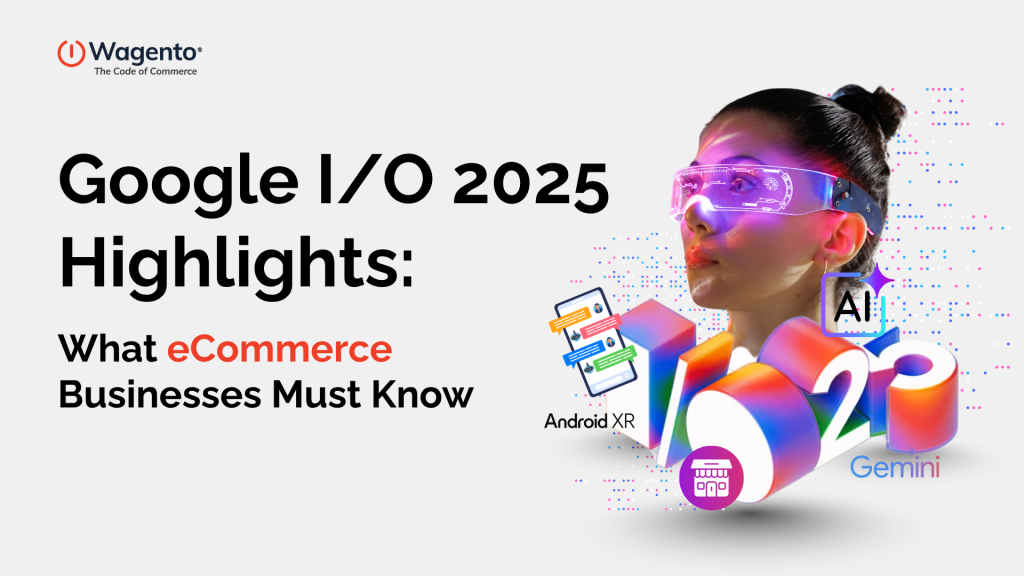
The Future is AI-First Google I/O 2025 in Focus
Google I/O 2025 showcased a new frontier in AI, immersive computing, and personalized digital experiences. With announcements that span generative media, smart glasses, next-gen AI agents, and deeply integrated search experiences, the implications for eCommerce are massive.
Google’s keynote didn’t just promise incremental improvements—it launched paradigm shifts. We’re seeing a clear transition from search-based commerce to conversation-driven and context-aware commerce. These aren’t beta experiments. They’re rolling out now.
Want to Make Your Store AI-Ready?
Learn how Wagento can help you.
Gemini 2.5 Pro Is Here—AI for Personalized eCommerce
What is Gemini 2.5 Pro?
Gemini 2.5 Pro, Google’s latest large language model, is now integrated into Chrome and Android, designed to supercharge AI-based search, personalization, and productivity. For eCommerce, it means smarter recommendations, intelligent chatbots, and even real-time support within the browser.
Unlike previous AI integrations, Gemini 2.5 Pro allows real-time, personalized experiences with deeper reasoning. It uses user history, contextual intent, and live feedback loops to refine results and outputs. The experience is more adaptive than anything before.
Gemini in Chrome eCommerce Use Cases
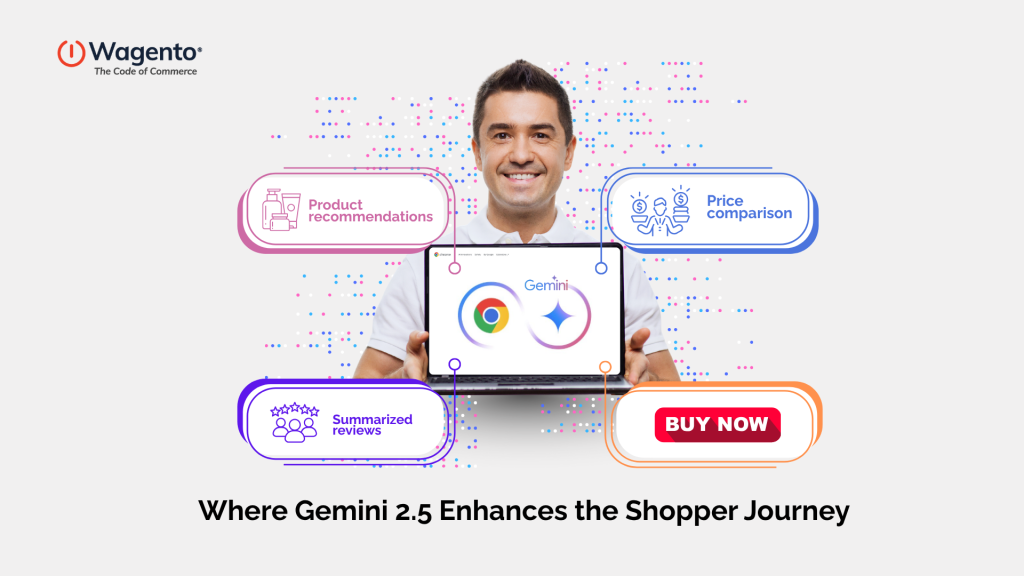
With Gemini embedded in Chrome, users can now ask questions directly from their browser, get intelligent shopping suggestions, summarize reviews, and more—all without leaving the page. Merchants can optimize their product pages for Gemini responses, improving customer engagement.
Early testers in retail have seen measurable boosts in click-through rates and cart conversions due to Gemini-enhanced interfaces. Expect Gemini prompts to become a key part of eCommerce product schema in the coming year.
Optimize Your Site
Don’t get left behind. Let us help you adapt your eCommerce
Veo 3 and Flow: Visual Storytelling Meets AI
What is Veo 3?
Veo 3 is Google’s most advanced text-to-video generation model yet, producing high-quality, realistic videos from simple prompts. For brands, this means lightning-fast product ad creation, tutorial videos, and influencer-style reels at scale.
It supports a range of prompts—from natural language inputs to pre-built templates—and outputs in vertical, horizontal, and square formats. This flexibility is crucial for multi-channel campaign distribution.
Flow AI Filmmaking Tool
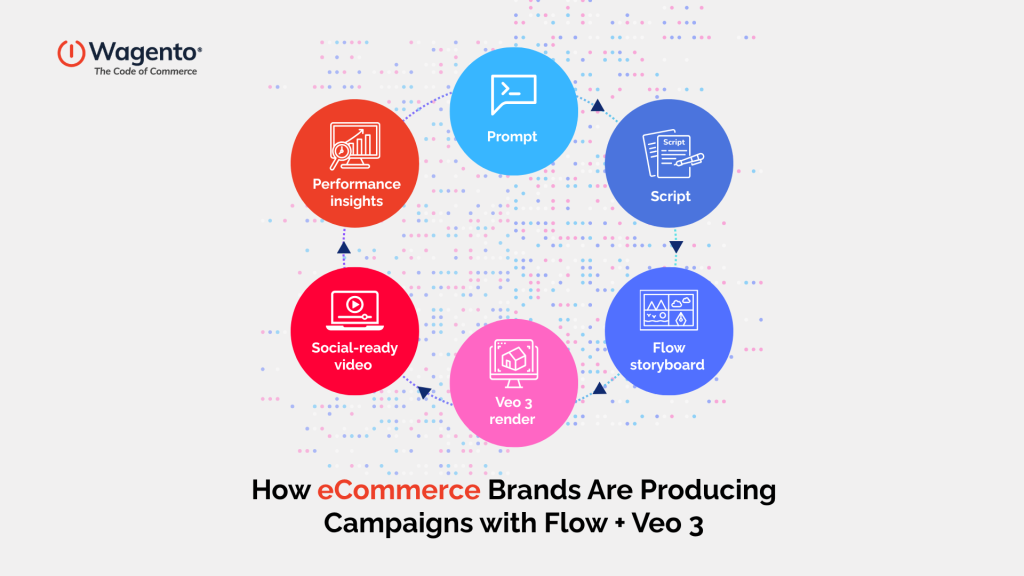
Flow is a new AI-powered media pipeline that brings together visual assets, scripts, prompts, and storyboarding into one automated video generation system. This simplifies campaign creation across social and product pages.
It even allows for brand style inputs, so your videos don’t just feel AI-made, they feel on-brand. The AI behind Flow can match tone, visual pacing, transitions, and even music to your campaign goals.
Why It Matters for eCommerce
Using Veo 3 and Flow, eCommerce brands can:
- Replace expensive ad shoots with generated content.
- Create hyper-targeted video ads per persona or segment.
- Launch localized visual campaigns in multiple languages.
- Auto-test A/B video variants for campaign optimization.
One early use case by a U.S.-based beauty retailer saw a 63% cost reduction in campaign production with Flow, while maintaining engagement metrics.
What Is AI Mode in Google I/O?
AI Mode is the evolution of Search—a generative, personalized, conversation-based experience launched in the U.S. and rolling out globally. Shoppers can now interact with search results, ask for follow-ups, and receive visual overviews.
The interface resembles a chat feed, where your query leads to a cascade of AI summaries, visuals, and product listings, rather than traditional blue links. Google calls this the “Age of Exploration” for online discovery.
AI Overviews SEO Impact for eCommerce

AI Overviews summarize web content and show key points at the top of SERPs. This can be both an opportunity and threat for SEO:
- Pros: More visibility if structured data and content are well-optimized.
- Cons: Less direct clicks if your info is fully summarized.
To rank well in AI Mode, businesses must ensure:
- Content is semantically rich.
- Product data is well-structured.
- Metadata feeds Gemini and AI Overviews.
- FAQs, schema, and conversational snippets are built-in.
Project Astra and the Rise of Autonomous Agents
What is Project Astra?
Project Astra introduces Google’s AI agents that can see, hear, speak, and understand context across screens. It represents a massive shift from prompt-based AI to continuous, sensor-aware AI companions.
Unlike today’s assistants, Astra listens for contextual clues, understands audio/visual input, and responds to real-world scenarios. It’s designed to be proactive rather than reactive.
Implications for Commerce
Imagine an Astra agent monitoring your shopping behavior and proactively suggesting:
- Inventory restocks for your business.
- Product combinations or bundles.
- Customer personalization via behavior prediction.
- Post-purchase follow-ups and review requests.
Soon, these autonomous agents will become vital to headless commerce environments, powering concierge-like services.
Android XR Smart Glasses and the New Retail Reality
What is Android XR?
Android XR is Google’s smart glasses platform in partnership with Samsung and others. It allows live translation, real-world object identification, and shopping from physical environments using AR overlays.
Google’s XR SDK provides developers with tools to build seamless AR commerce experiences, from browsing catalogs to completing payment with just a nod.
Smart Glasses in eCommerce
Smart glasses can change the shopping experience:
- Try-before-you-buy overlays.
- In-store navigation for large-format retailers.
- Personalized recommendations from scanning physical products.
- Real-time price comparisons while browsing physical aisles.
Brands can extend mobile commerce into wearable commerce, turning physical presence into a digital journey.
Google Beam and the New Era of Collaboration
What is Google Beam?
Beam is the next version of Project Starline—Google’s hyper-realistic 3D video conferencing platform. It enables photorealistic remote meetings without VR gear.
Use Cases for eCommerce Teams
Beam can be transformative for:
- Virtual sales meetings with buyers and vendors.
- Internal product reviews across global teams.
- Training and onboarding.
- Real-time, life-size presentations of products or prototypes.
Remote collaboration becomes immersive, especially in industries with long B2B sales cycles.
Have More Questions About Google I/O 2025?
Our experts are happy to explain how these innovations apply to your specific eCommerce use case.
FAQs: Google I/O 2025 and eCommerce Innovation
The most impactful updates include Gemini 2.5 Pro integration into Chrome for smarter browsing, Veo 3 for AI-generated product videos, Flow for automated campaign development, AI Mode Search with AI Overviews, Project Astra’s proactive AI agents, Android XR smart glasses for immersive shopping, and Google Beam for ultra-realistic video conferencing. These technologies together form a powerful toolkit for businesses to upgrade their online shopping experience and operational workflows.
Veo 3 allows brands to turn simple prompts into highly realistic product videos, while Flow automates the entire video creation pipeline—from concept to production. This eliminates high production costs and enables campaign personalization at scale. For example, a brand can instantly generate different ad versions for various customer personas or regions without the need for separate shoots or editing sessions.
It depends on your current SEO strategy. AI Mode and AI Overviews bring web summaries to the forefront of search results, which can either boost visibility or reduce clicks depending on your content’s structure. To benefit, businesses must enhance their structured data, use semantic SEO, and optimize for conversational queries that AI Mode favors. Done right, it can significantly increase brand authority and engagement.
Project Astra is Google’s next-gen AI agent that understands vision, voice, and context in real-time. For online businesses, this opens doors to intelligent automation: AI agents can guide users through the purchase process, recommend products based on behavior, or even handle inventory notifications and support without human input. This could redefine customer service and personalization standards.
Yes. Android XR creates opportunities for immersive shopping experiences where customers can try on products virtually, scan real-world items for digital purchase options, or receive real-time information while browsing physical shelves. Forward-thinking brands can start prototyping XR-compatible catalog experiences or in-store navigation systems today to stay ahead of the trend.
Now. Many features shown at Google I/O 2025 are already rolling out. Gemini in Chrome is live, Veo 3 and Flow are in early access, and AI Mode is expanding globally. Waiting could mean falling behind competitors who are already experimenting and adapting. Businesses should begin auditing their current digital capabilities and planning phased implementations of these tools.
Final Thoughts: The eCommerce Roadmap After Google I/O 2025
Google I/O 2025 keynote highlights are more than just futuristic demos. they’re a blueprint for the AI-first customer journey. With tools like Flow, Gemini, Astra, and Android XR becoming accessible, eCommerce leaders must invest in:
- AI-powered product content.
- Conversational shopping.
- Agent-based personalization.
- Immersive product discovery.
- Visual-first, generative media campaigns.
- Headless and wearable commerce interfaces.
The brands that move first will shape customer expectations in 2026. The ones who hesitate will be catching up for years.
Ready to Lead the Change?
We’ll help you turn trends into transformation.