



In an era where digital ad costs are skyrocketing and customer trust in paid media is declining, referral marketing stands out as one of the most powerful growth strategies. In 2025, it is no longer a “nice to have” but a core acquisition channel for both B2B and eCommerce businesses.
What Is Referral Marketing and Why It Matters
Referral marketing is the process of encouraging and rewarding your existing customers for bringing in new ones. Unlike ads, which often face skepticism, referrals are rooted in authentic trust. A friend’s recommendation carries more weight than any banner ad or sponsored post.
Why Referral Marketing Works
- Trust is scarce: Customers are overwhelmed by ads, reviews, and sales pitches. Referrals cut through the noise.
- CAC (Customer Acquisition Costs) is climbing: Paid ads are becoming more expensive, but referral marketing provides predictable, low-cost growth.
- Retention and loyalty: Referred customers are 16% more loyal and have a 37% higher retention rate compared to non-referred ones.
- Scalability: With software, referral programs are easier to launch, track, and optimize than ever before.
Referral Marketing vs. Affiliate Marketing
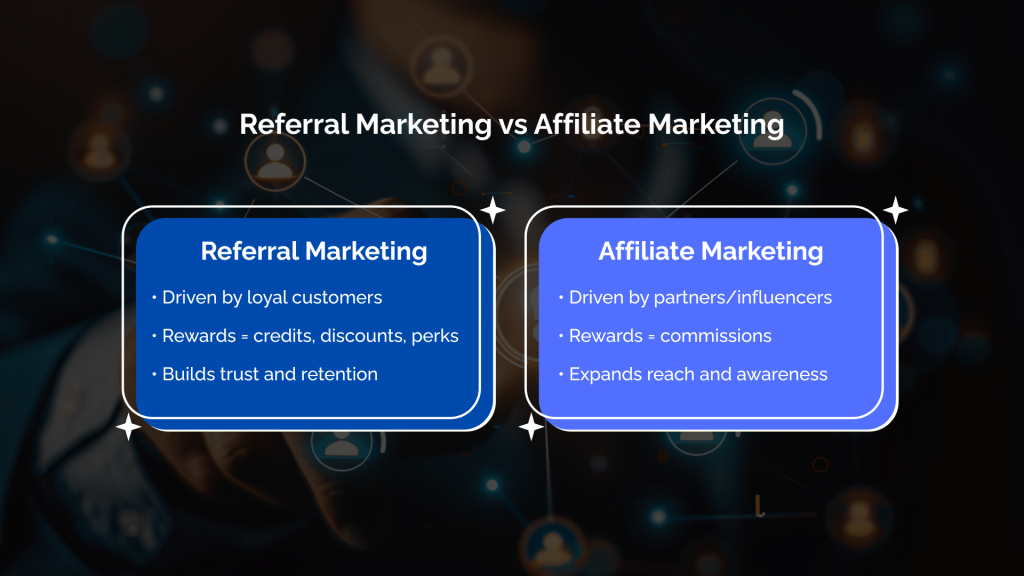
Although they share similarities, the motivation and outcomes differ.
Referral Marketing
- Driven by existing customers.
- Rewards: discounts, credits, or perks.
- Stronger social proof since it comes from personal connections.
- Focused on retention and trust.
Affiliate Marketing
- Driven by influencers, publishers, or partners.
- Rewards: monetary commissions.
- Works well for reach but less personal trust.
- Focused on scaling awareness.
Tip: Many businesses run both — affiliate for reach, referral for trust. Together, they create a full-funnel acquisition system.
The Role of Referral Program Software
Running a referral program manually is inefficient. Today’s referral program software automates tracking, reward distribution, and analytics.
Best Referral Program Software Tools
- ReferralCandy: Perfect for DTC brands with Shopify or WooCommerce.
- Viral Loops: Strong in gamification, viral contests, and referral ladders.
- Tremendous: Enterprise-grade, supports multiple reward formats (gift cards, prepaid cards).
- Tapfiliate: Blends affiliate and referral functions, suitable for SaaS and growing brands.
- 99Minds: Offers highly customizable reward logic for eCommerce.
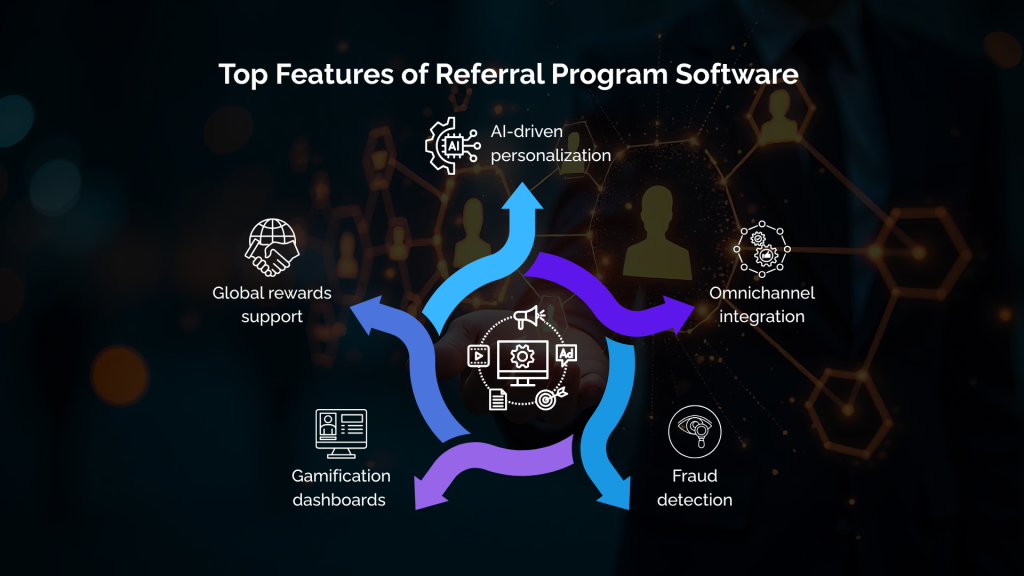
Features to Look For
- AI-driven personalization of rewards.
- Omnichannel integration with POS, mobile apps, and loyalty programs.
- Fraud detection to prevent abuse.
- Gamification dashboards (leaderboards, milestones).
- Multi-currency and global reward support.
For an in-depth comparison of tools and how to choose the right referral platform, see this review of 21 leading referral marketing software solutions in 2025.
Choosing software is just one step.
With Wagento’s B2B eCommerce Integration, we connect your referral platform with CRM, ERP, and marketing systems for seamless growth.
How to Run a Referral Program That Converts
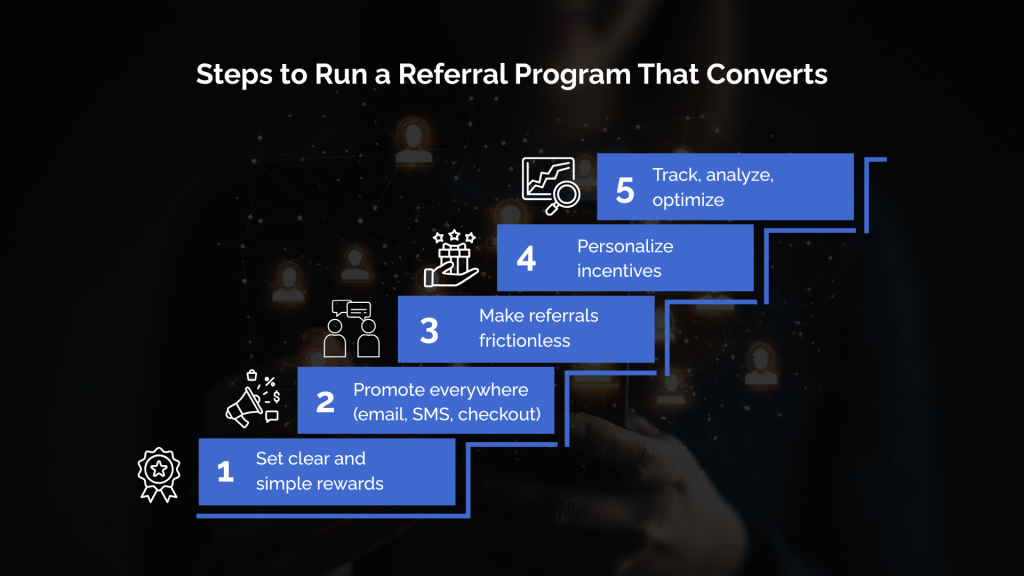
Even the best software will not save a poorly designed program. The secret lies in simplicity, clarity, and ongoing promotion.
1. Simple, Transparent Rewards
“Give $10, Get $10” works better than complex reward systems.
2. Multi-Channel Promotion
Promote your program across email, SMS, checkout, loyalty apps, and even in-store signage.
3. Remove Friction
Allow referrals via WhatsApp, QR codes, or personalized referral links.
4. Personalization
AI helps match the right incentive to the right customer (discounts for loyalists, gift cards for casual buyers).
5. Constant Optimization
Track referral rates, conversion rates, and ROI. Adjust offers regularly to avoid fatigue.
Personalization powered by AI is becoming a cornerstone of referral program success. To see how AI is transforming broader eCommerce experiences, check out our article on 7 ways to harness the power of AI in eCommerce.
Referral Program Ideas for B2B Businesses
Referral marketing is not just for consumer brands. In fact, B2B referrals often bring higher-value leads and faster conversions.
B2B Referral Program Models
- Tiered Incentives: Reward multiple referrals with increasing perks.
- Content Rewards: Access to exclusive research reports, webinars, or industry insights.
- Charity Tied Rewards: Donations to causes in the referrer’s name.
- Credits and Discounts: Account credits toward renewals or SaaS usage.
- Recognition-Based Rewards: Featuring referrers in newsletters or on company websites.
Example: A SaaS company offering project management software rewarded referrers with 25% account credit per successful referral. Within six months, referrals accounted for 18% of new signups.
B2B businesses are adapting fast to new digital expectations. To understand how referral programs can fit into broader growth strategies, explore the future of B2B eCommerce in 2025.
B2B referral programs demand deeper integrations and long-term pipelines.
Wagento’s eCommerce GrowthX helps you design strategies that boost acquisition and retention.
Referral Marketing for eCommerce: Case Studies
Bombas Socks
- Strategy: “Give $20, Get $20.”
- Result: Thousands of new customers through word of mouth.
Harry’s Razors
- Strategy: Pre-launch gamified referral system.
- Result: Over 100,000 pre-launch signups.
Dropbox (Classic Case)
- Strategy: Free storage for every referral.
- Result: 3900% growth in 15 months.
B2B SaaS Case Study
- Strategy: Credit-based referral rewards.
- Result: Referral-driven signups had a 25% higher average contract value.
Customer Referral Marketing Tips
Quick wins to strengthen your referral program:
- Combine referrals with loyalty programs.
- Run seasonal referral campaigns (holidays, product launches).
- Use gamified leaderboards to encourage competition.
- Leverage push notifications and in-app prompts.
- Highlight top referrers in your community.
- A/B test incentives (gift cards vs discounts).
Referral Marketing Trends
AI-Driven Personalization
AI tailors rewards to individual customer profiles.
Gamification
Leaderboards, point multipliers, and streaks keep programs engaging.
Sustainable Rewards
Eco-friendly gifts and charity donations resonate with younger audiences.
Omnichannel Programs
Integration with physical retail, mobile apps, and online stores.
Cross-Border Referral Programs
Global brands now launch referral programs that handle multiple currencies and legal compliance.
To see how referral marketing has evolved under privacy shifts and rising ad costs, explore this comprehensive 2025 guide.
Using Referral Marketing to Boost Customer Acquisition
With digital ad spend costs climbing, referral marketing becomes a cost-efficient growth engine.
Why it works for acquisition:
- Referred customers are more likely to convert.
- Word of mouth spreads faster in digital communities.
- Referral-driven acquisition costs are lower compared to PPC ads.
Referral marketing is one piece of a larger growth engine. For more tactics that complement referrals, explore Wagento’s guide to growth marketing strategies.
Advanced Referral Strategies
1. Referral Plus Loyalty Hybrids
Merge referrals into your loyalty system so advocates earn points for referrals.
2. Event-Based Referral Campaigns
Leverage seasonal events (Black Friday, Cyber Monday) to increase referral participation.
3. Employee Advocacy Programs
In B2B, employees can act as referrers, driving signups via personal networks.
4. Influencer + Referral Hybrid
Combine micro-influencers with referral programs for authenticity and reach.
FAQs
Q1: What is the difference between referral and affiliate marketing?
Referral marketing is customer-driven and trust-based, while affiliate marketing is partner-driven and commission-based.
Q2: How do I choose referral software in 2025?
Look for AI personalization, omnichannel integrations, fraud detection, and global compliance features.
Q3: Is referral marketing relevant for B2B businesses?
Yes. In fact, B2B buyers rely heavily on trust and peer recommendations, making referrals even more powerful.
Q4: What are some trending referral program ideas for eCommerce in 2025?
Gamified systems, eco-friendly rewards, loyalty hybrids, and influencer collaborations.
Q5: How can I measure referral program success?
Track referral participation rates, conversion rates, customer lifetime value, and ROI compared to other acquisition channels.
Conclusion
Referral marketing in 2025 is not a passing trend. It is a strategic necessity for businesses that want scalable, sustainable, and trustworthy growth. From AI-driven personalization to gamification and omnichannel integration, referral programs have matured into a cornerstone of modern acquisition strategies.
Ready to scale your referral marketing and customer acquisition?
From Magento Development to ongoing Support & Maintenance, we’ll partner with you for lasting results.