



The Evolving Game of Selling Online
The digital marketplace in 2026 is smarter, faster, and more competitive than ever. Customers expect hyper-personalized shopping experiences, instant customer support, and seamless checkouts.
If you want to sell more online, you need more than a pretty storefront. You need a complete eCommerce strategy — a combination of marketing, technology, and customer psychology that turns browsers into buyers and one-time buyers into loyal advocates.
This article explores the most effective eCommerce growth strategies for 2026, based on insights from the latest industry research, real-world agency expertise, and proven consulting frameworks. Whether you’re a startup or an established brand, these strategies will help you accelerate sales, boost retention, and future-proof your business.
Ready to turn your store into a sales machine?
Understand Your Market Before You Sell Online
Before you can sell products online effectively, you must understand who you’re selling to and what motivates them to buy.
Conduct Deep Audience Research
The best brands don’t guess, they analyze data from every touchpoint. Combine analytics (GA4, Shopify reports, Hotjar) with real-time social listening to understand demographics, psychographics, and buying triggers.
Ask yourself:
- Who is your most profitable customer segment?
- Which devices and channels do they use most?
- What challenges or emotions influence their purchase decisions?
According to Athos Commerce, brands that deliver seamless, personalized product discovery via AI-driven search and merchandising report significantly stronger conversion rates.
Identify Your Growth Markets
Global eCommerce growth in 2026 is being driven by emerging regional niches — Southeast Asia, Latin America, and the Middle East. Smartling (2025) emphasizes the power of localization — translating not just language but culture, pricing, and logistics.
For example, tailoring payment options (like UPI in India or PIX in Brazil) can increase conversion rates by up to 40 percent.
Craft an eCommerce Strategy Built for 2026
Define Clear Business Goals
Every eCommerce strategy must start with defined, measurable objectives.
Ask: Do you want to increase AOV (Average Order Value), LTV (Lifetime Value), or market penetration?
Your goals shape everything — from marketing to logistics.
Audit Your Current Store
A full eCommerce audit should evaluate:
- Website speed and UX (CRO baseline)
- SEO & product discoverability
- Checkout and mobile responsiveness
- Customer feedback & reviews
- Automation workflows (email/SMS)
Tools like Lighthouse and Hotjar can reveal friction points that kill conversions.
Build an Omnichannel Presence
Omnichannel strategy is no longer optional. Your audience interacts across devices and channels, and they expect consistent experiences.
Connect your store with:
- Social commerce platforms (Instagram Shop, TikTok Shop)
- Marketplaces (Amazon, Walmart, Mercado Libre)
- Offline experiences (pop-ups, QR driven events)
Omnichannel shoppers spend 1.5 times more each month than single-channel shoppers.
Master Your eCommerce Marketing Strategy
Prioritize Personalization
Generic marketing doesn’t cut it anymore. Personalization at scale — powered by AI tools like Klaviyo, Adobe Sensei, and Shopify QL — is the key to higher engagement.
Tactics include:
- Dynamic product recommendations
- Personalized email journeys
- AI-generated discount timing
Invest in SEO and Content Marketing
Search intent is evolving. Long-tail queries like “best sustainable fitness gear under $100” or “AI-powered pet feeder reviews” are surging.
Use blog content, category page optimization, and interactive content (quizzes, calculators) to capture these leads.
Ecorn Agency highlights that a well-executed eCommerce content strategy can drive up to 55% higher website traffic, 45% more qualified leads, and 35% greater sales growth. These results underscore how investing in content-driven commerce delivers measurable business value and strengthens customer trust.
Tip: Write with authenticity. Search engines reward E-E-A-T (Experience, Expertise, Authoritativeness, Trustworthiness) — ensure your content aligns with your real-world expertise.
Optimize Paid Advertising
Paid ads demand smarter budget allocation. Blend:
- Performance Max campaigns
- Retargeting ads (Meta + Google Display Network)
- Influencer collaborations
- Video ads on YouTube and TikTok
Use first-party data to retarget previous visitors more efficiently, while complying with privacy regulations like CCPA and GDPR.
For a deeper dive into long-term marketing frameworks that drive sustainable revenue, explore our guide on growth marketing strategies to accelerate business success.
Feeling overwhelmed by eCommerce marketing? We’ll simplify it for you.
Conversion Optimization and Checkout Experience

Reduce Friction in Checkout
Offer guest checkout, multiple payment methods, and mobile-first design.
Checklist for high-converting checkout:
- Auto-filled address and saved cards
- Trust badges and SSL certification
- Progress bar indicators
- Clear return policy
Use Urgency and Scarcity Wisely
Tactics like “Only 3 items left!” still work, but only when authentic. Combine psychological triggers with real stock tracking.
Consider limited-edition drops, early-bird discounts, and timed bundles.
Leverage User-Generated Content
Nothing sells better than social proof. Encourage customers to share reviews, unboxing videos, or photos in exchange for small incentives.
Build Customer Loyalty Through Retention
Use Data to Drive Retention
Successful eCommerce brands rely on predictive analytics. Tools like Rebuy or Yotpo Loyalty analyze customer behavior to predict churn and automate retention offers.
For example, if a customer hasn’t purchased in 45 days, automatically trigger a “We miss you” campaign with a personalized offer.
Subscription Models and Memberships
Consumers value convenience. Offering subscriptions (for consumables) or exclusive memberships (for premium perks) boosts recurring revenue.
Example: A beauty brand offering refills every 30 days increased LTV by 42 percent.
Create an Emotional Connection
Brands that communicate purpose and authenticity outperform those that only focus on discounts.
Share your story, highlight social impact, and speak in a human tone. Emotional loyalty is harder to break than price loyalty.
Harness eCommerce Strategy Consulting for Scalable Growth
Why You Need a Consultant in 2026
The digital landscape evolves faster than internal teams can track. That’s why many brands rely on eCommerce strategy consulting agencies to provide direction, analytics, and optimization.
A consultant helps you:
- Develop data-backed growth roadmaps
- Integrate new technologies (AI, AR, PIMs)
- Fix bottlenecks in marketing or UX
- Improve ROI from advertising and CRO
Choosing the Right Partner
Look for consultants who:
- Understand your platform ecosystem (Magento, BigCommerce, Shopify Plus)
- Have a proven track record of scaling stores
- Offer continuous optimization, not one-off audits
At Wagento, for example, strategy consulting covers audits, marketing, integrations, and data analytics — delivering measurable, lasting growth.
Discover how leading manufacturers and distributors are adapting with modern B2B eCommerce strategies for 2025 and beyond.
Globalization and Cross-Border Growth
Think Global, Act Local
Selling online in 2026 means serving diverse markets with tailored experiences.
Smartling (2025) emphasizes that localizing not only content but also logistics, pricing, and promotions drives higher global conversions.
Payment and Currency Optimization
Offer local payment methods, automatic currency conversion, and region-specific shipping options.
Failure to adapt causes up to 26 percent cart abandonment among international buyers.
Optimize for Cross-Border SEO
Target international keywords and regional marketplaces to expand your footprint.
Use hreflang tags, localized URLs, and native-language content.
Emerging Trends Driving eCommerce in 2026

AI-Driven Personal Shopping
AI shopping assistants are changing product discovery. Integrate chatbots powered by GPT-based agents to assist customers with product recommendations, size guides, and stock availability.
Sustainable Commerce
Today’s consumers care deeply about sustainability.
Highlight eco-friendly packaging, carbon offset programs, and transparent sourcing to attract conscious buyers.
Voice and Visual Search
ADA Global’s 2025 report states that 45 percent of Gen Z shoppers prefer using voice or image search. Optimize your store for these experiences to stay ahead.
Learn how emerging AI shopping agents are transforming the eCommerce buyer experience and helping brands personalize every interaction.
Final Thoughts
Selling online isn’t about competing for attention — it’s about delivering frictionless experiences backed by smart technology, strategic thinking, and emotional connections.
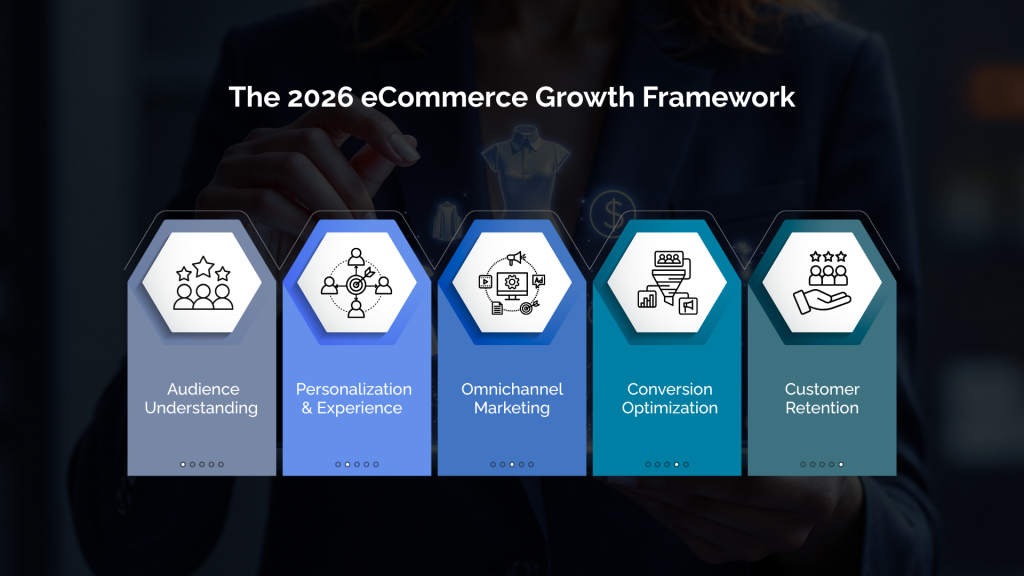
By combining these strategies — personalization, omnichannel marketing, CRO, retention, and consulting — you can turn your eCommerce store into a growth powerhouse.
Start by auditing your current strategy, investing in the right technology, and partnering with experts who can help you scale sustainably.
Ready to grow smarter, sell faster, and scale globally?
Frequently Asked Questions (FAQs)
1. What are the best platforms to sell products online in 2026?
Shopify Plus, BigCommerce, Adobe Commerce (Magento), and WooCommerce remain strong leaders, with new AI integrations improving performance and automation.
2. How can small businesses compete with large online retailers?
Focus on niche positioning, personalization, and community building. Smaller brands can build stronger emotional connections faster than enterprise players.
3. How much does eCommerce strategy consulting cost?
Costs vary by scope and platform, but most mid-sized businesses invest between $5,000 – $20,000 for a full strategy roadmap and audit.
4. What is the most effective marketing channel in 2026?
Email + SMS automation remains the top ROI channel, followed closely by influencer collaborations and short-form video marketing on TikTok and Instagram.
5. How do I know if my eCommerce strategy is working?
Track KPIs such as conversion rate, repeat purchase rate, CAC vs LTV ratio, and customer engagement metrics. Regularly audit these metrics quarterly.